
How Automation Freelancers in Europe Are Securing Long-Term Contracts in 2026
Author: IntaPeople | Date published: 30/04/26
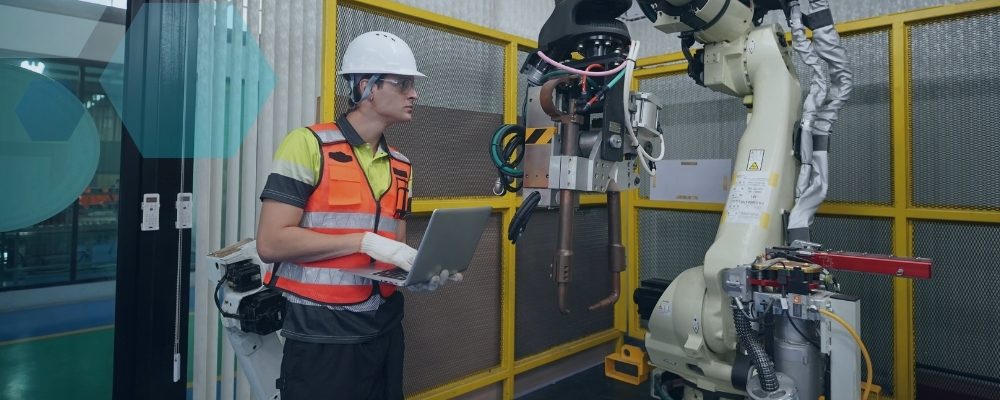

Industrial automation freelancers across Europe are moving away from short-term commissioning work and into longer, more stable engagements.
This is being driven by ongoing skills shortages in controls engineering, increased retrofit activity, and the need for continuous production optimisation across manufacturing sites.
In key markets such as Germany, the Netherlands, and Belgium, hiring managers are relying on freelance automation engineers not just to deliver projects but to keep production running efficiently long after go-live.
1. From Commissioning to Ongoing System Ownership
The biggest shift is how freelancers position their value.
Historically, contractors were brought in for:
- PLC programming
- Commissioning and site acceptance testing
- Short-term troubleshooting
In 2026, the freelancers securing long-term contracts are taking responsibility for entire automation systems over time.
This includes:
- Continuous optimisation of PLC and SCADA environments such as Siemens, Rockwell, and Beckhoff
- Remote monitoring and fault diagnostics
- Managing incremental upgrades across production lines
- Supporting maintenance teams with complex issues
In manufacturing environments, this often evolves into 6 to 18 month engagements tied to production performance rather than project milestones.
2. Brownfield and Retrofit Expertise Is in High Demand
Across Europe, most automation investment is going into existing facilities rather than new builds.
Manufacturers are prioritising:
- Upgrading legacy PLC systems
- Integrating newer HMIs and control layers
- Connecting machines to MES and ERP systems
- Improving energy efficiency and compliance
Freelancers who can work across legacy and modern systems are consistently retained.
Typical requirements include:
- Migrating older Siemens or Schneider setups to modern architectures
- Working in mixed-vendor environments
- Integrating additional elements such as robotics cells into existing lines
These projects are rarely linear. They require phased delivery and ongoing support, which drives longer contracts.
3. Manufacturing and Process Knowledge Is a Key Differentiator
In industrial automation, technical ability alone is not enough.
Freelancers securing repeat engagements usually bring sector-specific experience, particularly in:
- Food and beverage, including high-speed production and hygiene constraints
- Pharmaceuticals, including validation, traceability, and compliance
- Automotive, including cycle time optimisation and integrated automation lines
- Energy and utilities, where SCADA systems are central
Understanding how production actually operates reduces downtime and risk. For hiring managers, that makes a strong case for extending contracts rather than rotating contractors.
4. Belgium and Northern Europe as a Competitive Contract Market
Belgium is a strong example of how the European market is developing.
It offers:
- A dense concentration of manufacturing, pharmaceutical, and processing sites
- High levels of automation combined with legacy systems
- Ongoing demand for multilingual engineers
As a result:
- Contractors often work across multiple nearby sites including Belgium, the southern Netherlands, and western Germany
- Projects tend to be phased, leading to longer engagements
- Day rates remain competitive:
- €400 to €550 per day for general automation engineers
- €600 to €900 or more per day for specialists with process or multi-site experience
For hiring managers, this means competition for proven freelancers is high, particularly those already familiar with local environments.
5. Blending Controls with Production Data
Another factor extending contracts is the growing need to extract value from production data.
Automation freelancers are increasingly involved in:
- Capturing data from PLC systems
- Supporting MES integration
- Improving OEE tracking and reporting
- Enabling predictive maintenance initiatives
This work sits beyond initial system delivery and creates ongoing demand for engineers who understand both controls and production performance.
Freelancers who can contribute in this space are far more likely to be retained long-term.
What Hiring Managers Should Do Next
If you are hiring industrial automation freelancers in Europe:
- Focus on engineers who can support ongoing optimisation, not just commissioning
- Prioritise experience in brownfield and retrofit environments
- Look for sector-specific manufacturing knowledge
- Be clear on longer-term project phases when engaging contractors
- In competitive markets like Belgium, move quickly to secure the right talent
In many cases, a strong freelancer provides continuity and expertise that is difficult to build internally, particularly for complex or ageing production environments.
How IntaPeople Can Help
IntaPeople supports manufacturing and engineering businesses across the UK and Europe with specialist automation talent.
We can help with:
- Access to experienced PLC and controls contractors, including those with robotics exposure where required
- Insight into European day rates and availability in markets like Belgium
- Talent mapping for multi-site or long-term automation programmes
If you are hiring in industrial automation and want a realistic view of the European market, IntaPeople can help you secure the right expertise for the long term.